| |
| Wednesday, 23 September 2026 |
| 1066 and All That: The Bayeux Tapestry – what does it really depict? Some secrets and mysteries revealed |
| Martin Heard |
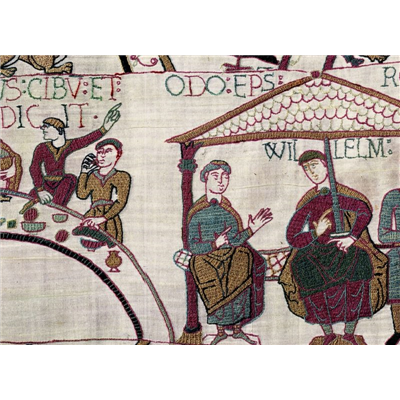 |
One of Europe’s best-known treasures, also a great medieval art work,its survival almost intact over nine centuries is miraculous. Embroidered on linen using wool, its brilliant colours undimmed after nearly a millennium, it was at least 70 m by 50 cm, with well over 1,000 human and animal figures plus numerous ships, buildings and other representations. No other contemporary object comes near in design complexity. History’s first cartoon strip, a sequence of scenes form a continuous narrative, one incident flowing effortlessly into the next depicting the events relating to the struggle for England’s throne from 1064 culminating at the Battle of Hastings in October 1066. The Tapestry itself is so close to the events it describes, and portrays them in such vivid detail, that it is in its own right a first order historical source, not only for 11th-century political crises but also social history.? The lecture starts with the historical and geographical context, followed by a tour explaining the events and the significance of interesting incidentals in the narrative. Then the mysteries: Who commissioned it? Who designed it and where was it made? Was King Harold really killed by an arrow that pierced his eye? Martin Heard studied Art History at Manchester then spent 3 years in the editorial department of a fine art publishing company. After a detour into the world of IT living and working in both continental Europe and North America he 'retired' to devote his time to research in English and French eighteenth, and late nineteenth century art and architecture; and European garden history from the medieval period to that of the great landscape gardeners, Capability Brown and Humphry Repton. |
|
| Wednesday, 21 October 2026 |
| Manet and Monet: Founders of Impressionism? |
| Norton Asbury |
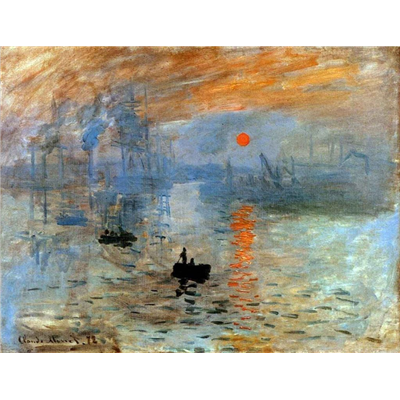 |
Impressionism is now universally popular. Edouard Manet and Claude Monet in particular were pivotal in its foundation. The term did not exist as a title until 1874, when a group of young artists – including Monet, Degas, Cezanne, Renoir, Pissarro, Morisot and Sisley, but not Manet – held their own exhibition, to get their work seen by the public. This followed their protests about unfair treatment and regular rejections by the official Paris Salon organisers over a number of years. To find out why the 1874 exhibition took place at all, and what many critics and members of the public found so challenging and unacceptable in these new paintings, we return to the 1860s to see how and why Manet and Monet were challenging the art establishment. Manet’s first submission to the Paris Salon - the most important venue for contemporary art was in 1859 and Monet’s in 1865 – the year Manet’s Olympia caused outrage. Although he submitted paintings to the official Salon throughout his career and did not exhibit with the Impressionists, his high profile and rebellious reputation led commentators and writers to regard him as the leader of young painters, including Monet, the core of the Impressionist group from 1874 onwards. Norton Asbury is a freelance art historian and tutor, who has provided a wide range of art historical talks and practical art workshops for Phyllis Court, The National Gallery, the Wallace Collection and various other organisations. His particular area of interest is French art from circa 1850 to 1880 as well as the role of drawing in the work of different artists. He studied at The Courtauld Institute of Art from 2002 to 2005 and was awarded a 1st Class BA (Hons) degree in History of Art |
|
| Wednesday, 18 November 2026 |
| An instrument of torture or delight — the Recorder, a history, from Anon (c.1400) to Alien Covenant (2104 [sic] ) |
| Evelyn Nallen |
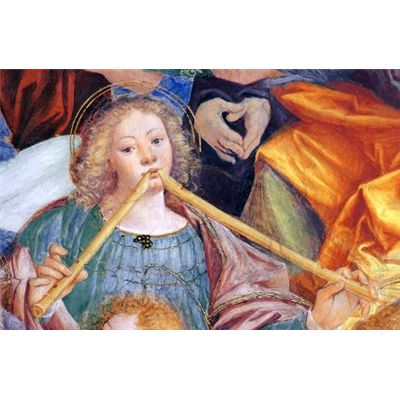 |
An illustrated lecture, with live music, on a variety of top-end professional recorders (no plastic in sight!). So often just associated with school music, the recorder has a long and rich history, a favourite of Henry VIII and composers from Purcell, Bach and Handel through to Paul McCartney and Jonathan Dove, not to mention the Hitler Youth! Often used in paintings and operatic scores to represent love, the recorder or ‘sweet flute’, can be heard in the recent film ‘Wicked’. Recorder players include Henry VIII, Paul McCartney, Sir Keir Starmer and David the Android (Alien Covenant) Founder and Musical Director of The Weaver Ensemble, a baroque theatre troupe, Zero Gravity, Cambridge’s Recorder Band and founder member of Respectable Groove the innovative early-music/jazz group. She made her BBC debut as a recorder player at the age of nine and since then has appeared on BBC TV and BBC Radios 1, 2, 3 & 4 and given concerts and presented lectures in Europe, the Americas and Australia. She was Director of The European Recorder Teachers Association for 5 years and taught recorder at The Royal Academy of Music, Junior Department, retiring in 2022. |
|
| Wednesday, 27 January 2027 |
| The Secrets of Barcelona’s Sagrada Familia Basilica |
| Chris Newlands |
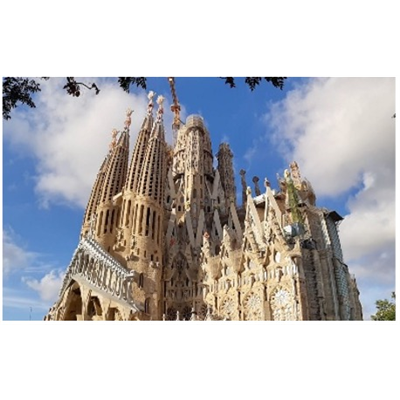 |
Antoni Gaudi's Sagrada Familia is one of the world's most recognisable buildings, the world's tallest church, though still unfinished. Discover the story of its design, and the evolution of the building project, and why it is Spain's most visited monument, attracting global attention. Canon Chris Newlands is a retired Anglican priest. Before ordination, he worked for the British Council in Algeria, then became Embassy Chaplain and Envoy of the Anglican Communion to the Orthodox Churches of Eastern Europe. |
|
| Wednesday, 17 February 2027 |
| The Magnificence of the Inca Empire |
| Eileen Goulding |
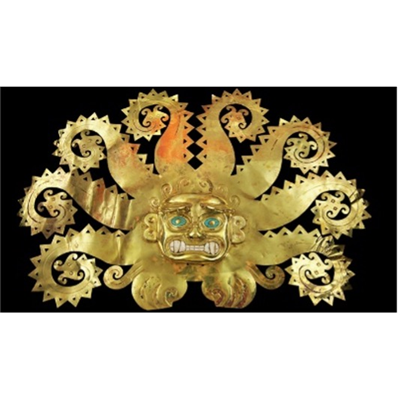 |
This most famous of pre-Colombian cultures had no wheels, no iron, no written language and yet they built an empire in less than 200 years. Learn how they did it and see examples of their skills using gold and other precious materials. This is human ambition at its peak, and its resulting achievements.
Eileen was awarded an MA Egyptology in 2012. Recently she has specialised in the empires of Central and South America, tribal histories of South Africa and Australian Aboriginals, and the medieval Crusades.
|
|
| Wednesday, 24 March 2027 |
| Charles Rennie Mackintosh |
| Rosalind Whyte |
 |
Scottish architect, designer and artist Charles Rennie Mackintosh is now famous and a major tourist draw in Glasgow, but following some early success, including his masterpiece, the Glasgow School of Art, his prospects floundered. The lecture tracks him from that early success through years of doubt and struggle, ultimately to the South of France. He travelled with his wife and collaborator Margaret and reinvented himself as a water colour painter. Rosalind Whyte, graduate of Goldsmith’s and Birkbeck College, is a guide and lecturer at Tate Britain, Tate Modern, the Royal Academy and Greenwich. |
|
| Wednesday, 21 April 2027 |
| Making sense of Portraits in Country Houses |
| Amy Lim |
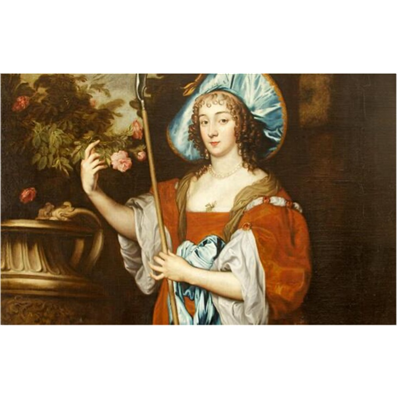 |
Country houses are often full of historic portraits, but to today’s visitor it is not always clear who they are or why they are there. 17th and 18th century visitors knew how to ‘read’ and understand their visual cues. This lecture looks closely at clothes, poses and accessories to learn how to decode them and how they communicated status, networks and identities.
Amy is an art historian, teacher and publisher specialising in 17th- 20th century British fine arts. She is curator of Cookham’s Stanley Spencer Gallery among others, and teaches at Oxford Lifelong Learning. |
|
| Wednesday, 19 May 2027 |
| Off the Record: Album Cover Art 1950-2000 |
| Rupert Dickens |
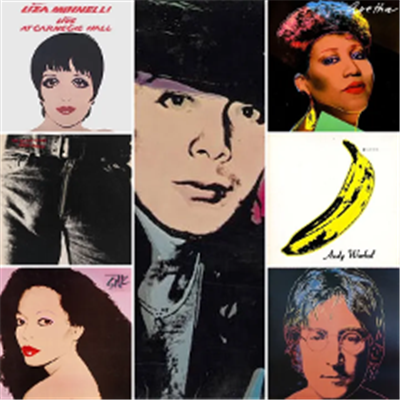 |
Some of the most memorable 20th century images were created, not for galleries or collectors, but record sleeves. A zebra crossing on the Beatles’ Abbey Road is a pilgrimage site. Album covers adorned by Andy Warhol, Peter Blake, Salvador Dali, Richard Hamilton and a host of other artists reveal close connections between visual and musical creativity. Starting as a BBC journalist, Rupert studied art history, then took a Masters in Dutch Golden Age Studies. He specialises in Dutch and Flemish 16th and 17th century painting and is a guide at the Wallace Collection. |
|
| Wednesday, 16 June 2027 |
| Pleasure, Practicality and Pain: A History of Shoes |
| Joanna Banham |
 |
Essential foot protection since ancient times, shoes were rarely inspired simply by comfort or need, but indicate status, identity, taste. Some, like medieval poulaines and Venetian chopines, epitomise fashion’s triumph over function. Heels, invented to keep men’s feet in stirrups, became symbols of fragile female allure. Humble sandals led to sophisticated buckles, kitten heels, buttoned boots, and modern designer footwear.
Curator, lecturer, writer, Jo led Adult Learning at many major galleries, was Curator at Leighton House and Assistant Keeper at Whitworth Art Gallery. and is Director of the Victorian Society Summer School. |
|
| Wednesday, 21 July 2027 |
| The films of Mel Brooks & Woody Allen |
| Colin Shindler |
 |
To understand Allen and Brooks films, Colin examines them in the context of Jewish history at the time. Hollywood studios were all founded by Jews, but they never appeared on screen until after the war. Why? This was the era of the Marx Brothers, Jack Benny and Sid Caesar. How is the rising power of American Jews reflected in their humour?
After an award-winning career in TV, radio and film, Colin has lectured on American and British social and cultural history for over 30 years at Cambridge University and elsewhere. A prolific writer, he regards his greatest cultural contribution as choosing the title music for “Juliet Bravo”.
|
|